
Dial Flowmeters

6 products

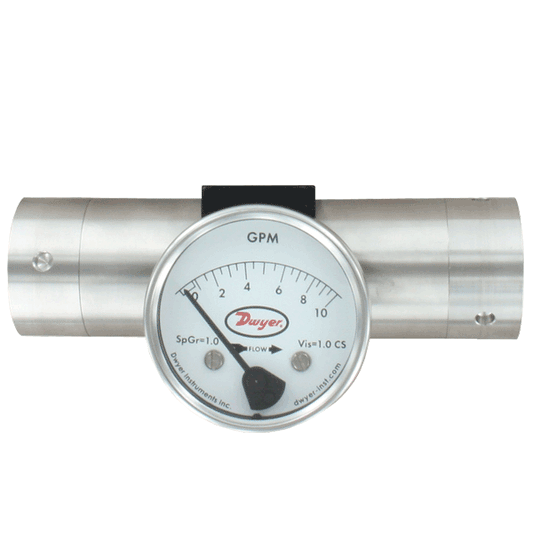
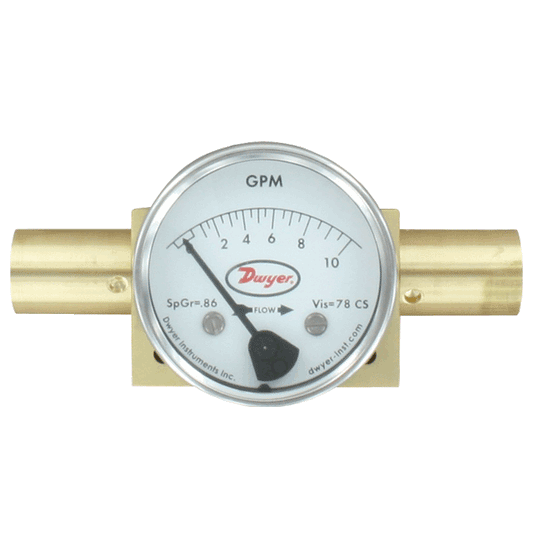
Our Dial Flowmeters combine vintage mechanical charm with practical functionality. Featuring a classic dial gauge display, these meters offer clear analog readings suited for systems without power or in harsh conditions where digital screens may fail. Durable and cost-effective, they are commonly used in field instrumentation, oil and gas, and industrial processing where ruggedness and simplicity matter. Easy to install and interpret, Dial Flowmeters deliver trustworthy performance, making them ideal for traditional setups and environments where clear, mechanical readouts are essential.

Frequently Asked Questions

HK Calibrations provides and calibrates a variety of dial-based instruments, including plunger-type dial indicators, test indicators, and thickness gauges. These tools are essential for measuring linear distances, mechanical tolerances, and component runout in Australian workshops.

To ensure high-precision machining and manufacturing accuracy, HK Calibrations recommends professional calibration every 12 months. Regular verification prevents errors caused by internal gear wear or spring fatigue, ensuring your measurements remain within micron-level tolerances.

Yes, we provide precision testing and certification for all leading brands, including Mitutoyo, Starrett, and Mahr. HK Calibrations issues traceable certificates that verify the instrument's accuracy and repeatability across its entire travel range.

HK Calibrations offers a rapid 48-hour turnaround at our seven state-of-the-art laboratories across Australia. This express service ensures your essential metrology tools are back on the production line quickly, complete with a professional certificate.

If your dial indicator has a sticking plunger, a cracked crystal, or erratic movement, HK Calibrations offers expert cleaning and repair services. We restore the internal mechanical movement to manufacturer specifications before performing a final accuracy check.

Every dial instrument serviced by HK Calibrations is issued with a detailed calibration certificate traceable to national standards. This documentation is vital for Australian facilities that must demonstrate equipment accuracy during ISO 9001 or quality assurance inspections.