
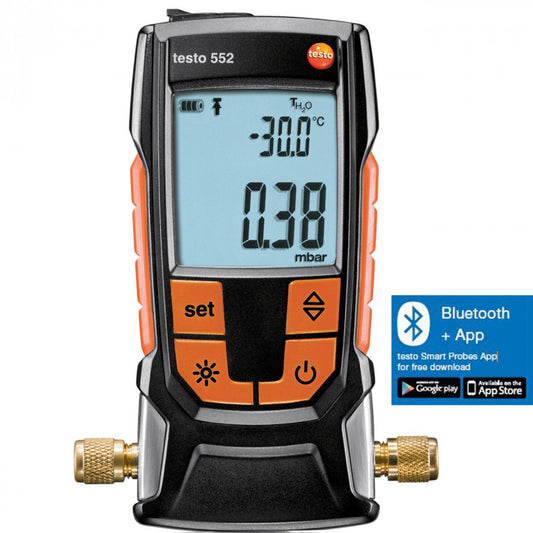
Vacuum Gauges

1 product

Best Quality Vacuum Pressure Gauges

A good quality vacuum pressure gauge helps measure the pressure in a vacuum. The wide range of instruments is to cater for the various types of a vacuum system and required operating vacuum level. It helps determine the vacuum level of the chamber accurately at a given moment in time.  

Common applications of vacuum gauges

Almost every industry use vacuum, from the automotive industry, food and beverage, manufacturing, pharmaceutical, chemical etc. These gauges are essential to ensure optimal performance and safety of the system. It helps in keeping the workplace clean from pollutants, transport materials and others.

One should understand that vacuum pressure gauge and absolute pressure gauge are not the same. The former model measures pressure against atmospheric pressure, while the latter measures pressure concerning absolute zero points. One can obtain accurate results if the gauges include a reference chamber with a vacuum.

Frequently Asked Questions

Vacuum sensors are highly sensitive to "drift" caused by oil mist or gas contaminants. Calibration ensures your gauge accurately measures deep vacuum levels, preventing pump damage and ensuring process integrity in HVAC and lab systems.

Many gauges measure "relative" vacuum. Professional calibration accounts for local barometric variances, ensuring your readings whether in Microns, Pascals, or mBar are absolute and traceable to national standards.

Yes. We provide high-precision certification for Pirani and Piezo sensors, ensuring the ultra-low pressure measurements required for Australian scientific research and pharmaceutical manufacturing are 100% accurate.

If a gauge inaccurately reports a deep vacuum, moisture may remain in the system, leading to acid formation and compressor failure. Annual calibration is the only way to guarantee a "dry" system per Australian refrigeration standards.

Absolutely. We verify the linearity of digital sensors across their full range. This prevents "stuck" readings or electronic lag, ensuring you can detect the smallest vacuum leaks during critical pressure-rise tests.

We recommend annual calibration. However, if your gauge is frequently exposed to refrigerant oil or chemical vapors, 6-monthly servicing is advised to clean and verify the sensor's response time.