
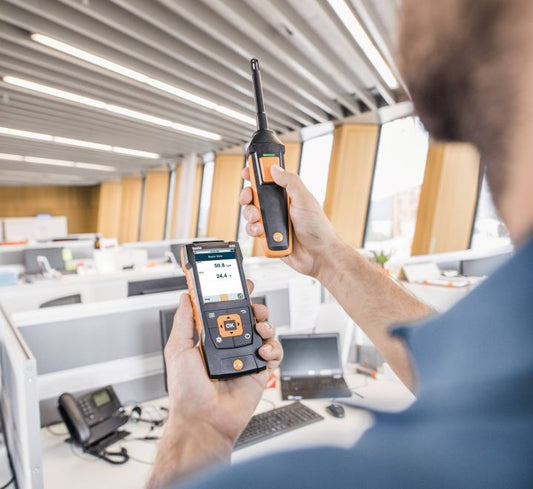

Humidity & Moisture Meters

51 products

Moisture that goes unmeasured has a habit of turning into an expensive problem, whether it is mould in a wall, warped timber or a process running outside its ideal conditions. Our humidity and moisture meters help builders, restorers, growers and facilities teams across Australia keep an eye on it before it does damage. 

The range answers two related questions. Humidity meters and thermo-hygrometers track the moisture in the air, which matters for comfort, storage, cleanrooms and preventing condensation. Moisture meters measure water content inside materials like timber, plaster and concrete, so you know whether a substrate is dry enough to build on, coat or seal. 

Pin-type meters read moisture at depth through contact probes, while pinless models scan a surface without leaving marks. Choosing between them depends on the material and whether you can afford to break the surface, and our team can guide you. 

Readings only guide good decisions when the meter is accurate, and sensors drift over time. We calibrate the equipment we sell, with ISO 9001 certified processes and traceable results that hold up in reports and inspections. 

We deliver to trades, labs and industrial sites nationwide. Unsure which meter suits your material or environment? Ask our team for a clear recommendation.

Frequently Asked Questions

A humidity meter measures watervapourin the air, usually as relative humidity, and often adds temperature. A moisture meter measures water content inside a solid material such as timber, plaster or concrete. One watches the environment, the other checks the material, and many jobs need both.

Pin-type meters pass a small current between two probes and read the resistance, which changes with moisture content.Pinlessmeters use electromagnetic sensing to scan just below the surface without marking it. Each suits different tasks, and the reading guides whether a material is safe to build on or coat.

Indoor humidity affects comfort, health and the condition of a building and its contents. Too high and you risk condensation,mouldand dust mites, too low and timber shrinks and static builds. Monitoring lets you keep conditions in a healthy band for people, stored goods and sensitive equipment.

Pin meters read moisture at a set depth and pinpoint a damp spot precisely, though they leave tiny holes.Pinlessmeters scan quickly over a wider areawithout marking the surface, ideal for finished work. Many professionals carry both and switch depending on the material and situation.

Yes. Humidity sensors in particular drift with age and exposure, and an inaccurate reading can lead to a wrong call on a build, a restoration or a stored product. Regular calibration keeps results trustworthy. We calibrate the meters we supply and provide traceable results for your records.

It depends on the timber and its end use, but many interior applications aim for moisture in single figures to low teens as a percentage, close to the surrounding equilibrium. Applying a finish over damp timber invites peeling and movement, so a moisture meter check is a sensible last step.

Yes. We stock humidity and moisture instruments and ship to builders, restorers, growers and industrial sites nationwide. Tell us the materials or environment you monitor, and whether you prefer pin orpinless, and we will recommend a meter that suits the way you work.